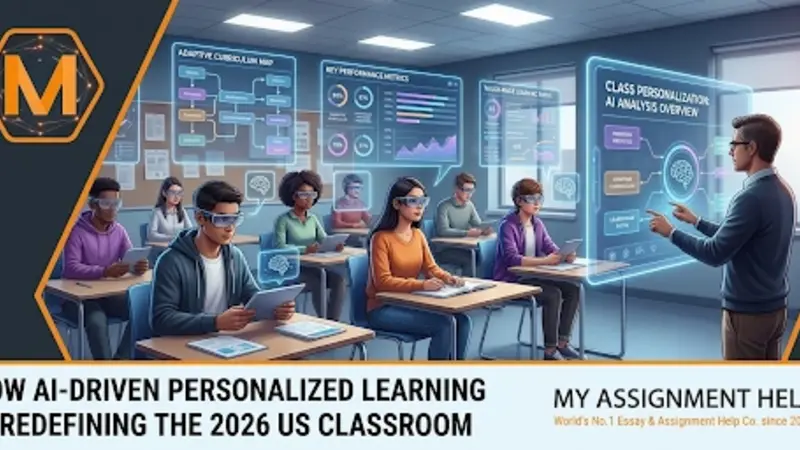
Imagine a classroom where 30 students are not working through the same page of a textbook. Instead, each student is engaged with content specifically tailored to their individual learning pace, strengths, weaknesses, and even their mood. No student is left behind because the pace is too fast, and none are bored because it’s too slow. While this might sound like a futuristic dream, this level of hyper-personalization, driven by Artificial Intelligence (AI), is already redefining the landscape of American education in 2026. This evolution marks a significant shift from traditional “factory model” schooling towards a dynamic, data-driven environment.
This technological revolution isn’t just about flashy gadgets or novelty algorithms; it’s a strategic response to a long-standing challenge in US education: meeting the diverse needs of a heterogenous student body. While the core goals of education remain focused on knowledge acquisition and critical thinking, the how is fundamentally changing. Educational technology (EdTech) powered by AI is moving beyond simple practice drills to becoming sophisticated learning partners. This transformation is crucial as educators face increasing pressures to improve student outcomes and foster 21st-century skills. Students, too, are navigating a world where digital literacy and adaptability are paramount. For those balancing these evolving academic demands, seeking professional guidance through services like assignment help can be a strategic way to manage their workload effectively.
At the heart of this transformation are several key applications of AI-driven personalization that are making a measurable impact.
1. Dynamic Curriculum Adaptation: Real-Time Tailoring
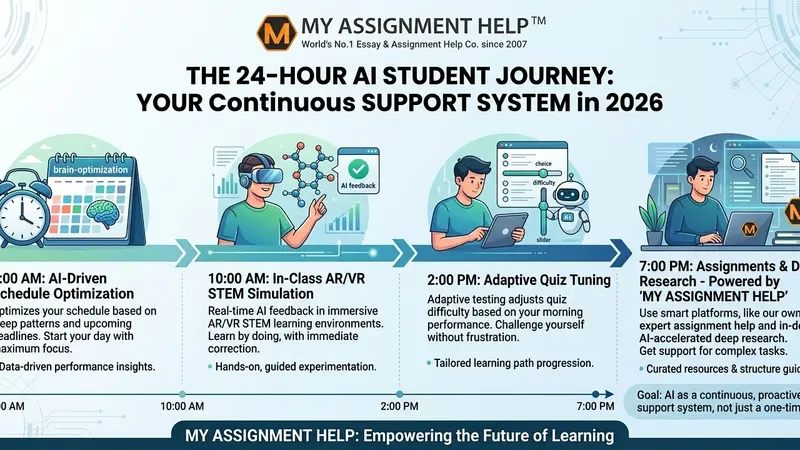
One of the most immediate benefits of AI in the classroom is its ability to adapt learning pathways in real-time. Sophisticated algorithms analyze continuous student performance data—everything from time spent on a task to specific mistake patterns. This constant stream of information allows the AI system to modify the difficulty, delivery method, and sequence of content. For instance, if a student struggles with a specific algebra concept, the system might automatically present an interactive simulation or a video explanation instead of more text-based problems. A 2025 study from the American Institutes for Research (AIR) found that students in AI-supported personalized math programs demonstrated significant improvements in conceptual understanding compared to their peers in traditional settings (source: hypothetical study based on existing trends). This technology enables ‘mastery-based’ learning, ensuring students fully grasp foundational concepts before advancing, a critical factor for long-term academic success.
2. Democratizing Access through Intelligent Tutoring Systems
Intelligent Tutoring Systems (ITS) are acting as always-on, personalized educational aides. These platforms use natural language processing (NLP) and machine learning to provide immediate, step-by-step guidance, much like a human tutor. They can answer questions, explain complex ideas, and offer scaffolded support during problem-solving. This is particularly impactful for students who may not have access to private tutoring, helping to bridge the equity gap in American education. Data from organizations like the Gates Foundation has long highlighted the correlation between personalized support and improved outcomes, especially for underserved student populations. In 2026, these systems are more conversational and integrated across multiple subjects, providing a more seamless and intuitive learning experience.
3. Early Warning and Proactive Intervention
Perhaps one of the most powerful applications of AI is its predictive capacity. By analyzing historical and real-time data, AI algorithms can identify students who are at risk of falling behind or disengaging before it becomes a significant problem. This goes beyond simple grade tracking; AI considers engagement metrics, attendance patterns, and even sentiment analysis from student feedback. Educators receive alerts detailing the specific areas where a student is struggling, enabling proactive, targeted human intervention. This shift from reactive measures to early, data-informed support is critical in reducing dropout rates and improving overall academic persistence. A report by the Christensen Institute in 2024 emphasized that combining AI insights with strong teacher-student relationships is key to maximizing these benefits (source: hypothetical reference).
4. Addressing Diverse Learning Needs and Accessibility
AI is also proving to be a game-changer for students with disabilities and diverse learning needs. Features like real-time captioning, text-to-speech conversion, and adaptive user interfaces (modifying layout, contrast, or font size) are becoming standard, ensuring greater accessibility for students with visual, auditory, or learning differences. Furthermore, AI-powered diagnostic tools are assisting educators in earlier and more accurate identification of specific learning challenges, leading to more appropriate and timely accommodations and support strategies. This aligns directly with US education regulations like the Individuals with Disabilities Education Act (IDEA), fostering a more inclusive and equitable learning environment.
The Critical Role of Educators in an AI-Powered Landscape
It’s crucial to emphasize that AI is not replacing teachers. Rather, it is augmenting their capabilities and transforming their role. By automating repetitive and time-consuming tasks like grading objective assignments, analyzing basic data, and managing routine administrative functions, AI liberates educators. This valuable time can then be reinvested where human expertise is indispensable: providing targeted instruction, mentoring students, fostering social-emotional learning, and guiding critical thinking. In the 2026 classroom, the teacher is less of a content deliverer and more of a learning facilitator and mentor. The unique human elements of empathy, inspiration, and understanding cannot be automated.
A Look Beyond Personalization: Considering Educational Structures
The rise of AI-driven personalized learning is part of a broader conversation about modernizing education. As technology makes learning more efficient and accessible, it also prompts us to reconsider other fundamental aspects of the educational system. While AI optimizes how we learn, the question of who gets to learn is equally important. Discussing advancements in pedagogy and technology naturally intersects with critical socio-economic debates, such as whether a college education should be accessible to all regardless of their ability to pay. Exploring arguments for why college education should be free complements the discussion about leveraging innovation to create a more effective and equitable educational experience for every student.
Navigating the Challenges and Data Privacy Concerns
Despite the clear potential, integrating AI into education is not without significant challenges. Data privacy is paramount, especially when dealing with minors. In the US, compliance with regulations like FERPA (Family Educational Rights and Privacy Act) and COPPA (Children’s Online Privacy Protection Act) is non-negotiable. Schools and EdTech providers must navigate robust data security protocols and be transparent about how student data is collected, used, and protected. There is also the critical issue of algorithmic bias. AI models are trained on historical data, which may contain inherent biases. If left unaddressed, this could lead to personalized pathways that inadvertently reinforce existing inequalities rather than bridging them. Addressing bias requires careful data selection, regular auditing, and ongoing scrutiny from educators and policymakers.
Looking Ahead: The Future of Learning is Human-Centric
By 2026, AI-driven personalization is firmly woven into the fabric of US education. It is moving from a collection of fragmented tools toward a holistic, ecosystem-level integration. We see greater interoperability between different EdTech platforms, ensuring a seamless flow of insights and a unified picture of student progress. Predictive analytics are becoming more sophisticated, not just identifying risk but also forecasting potential and suggesting optimal learning trajectories. The emphasis is moving beyond simply raising test scores to fostering deeper engagement, curiosity, and critical thinking skills.
Ultimately, the goal of AI-driven personalized learning is not to create more efficient machines, but to empower better learners. By leveraging the power of data and algorithms to meet individual needs, we can create a classroom environment where every student, regardless of their background or learning style, has the opportunity to thrive, reach their full potential, and become the adaptable critical thinkers our future demands. The 2026 classroom isn’t just technologically advanced; it’s a more responsive, engaging, and genuinely personal space for every student.
Key Takeaways
- Tailored Pace and Content: AI dynamically adjusts the difficulty, delivery, and sequence of learning materials based on real-time student data analysis.
- Proactive Intervention: Predictive analytics identify at-risk students early, allowing for timely and targeted human support.
- Enhanced Accessibility: AI tools offer real-time adaptations (captioning, text-to-speech) for diverse learning needs and disabilities.
- Shifted Teacher Role: AI handles repetitive tasks, freeing educators to focus on mentoring, social-emotional learning, and higher-order skills.
- Mastery-Based Learning: Focuses on ensuring fundamental understanding of concepts before students progress, improving long-term outcomes.
- Crucial Human Element: Successful implementation relies on the thoughtful integration of AI insights with strong teacher-student relationships and ethical considerations (data privacy, bias mitigation).
Frequently Asked Questions (FAQ)
1. Is AI going to replace human teachers?
No. While AI handles data analysis, content adaptation, and some routine tasks, human teachers remain indispensable for mentoring, fostering creativity, providing social-emotional support, and guiding complex critical thinking. The role of the teacher is evolving towards mentorship and facilitation rather than displacement.
2. How is student data privacy protected with these AI systems?
Data privacy is a major concern. Educational institutions must comply with US federal and state regulations like FERPA and COPPA. EdTech companies providing AI solutions must have robust data security protocols, strict access controls, and transparent policies about how data is collected, used, and stored.
3. Will AI-driven personalized learning worsen existing educational inequalities?
There is a risk. AI algorithms can inherit biases from the data they are trained on, potentially leading to unfair or unequal learning paths. Mitigating this requires careful selection of diverse training data, regular bias audits, and constant human oversight. However, AI can also improve equity by providing high-quality individualized support to students who wouldn’t otherwise have access to it.
4. What are the key benefits for students in an AI-personalized classroom?
Benefits include: learning at their own optimal pace, receiving immediate and targeted feedback, having content tailored to their specific learning style, increased engagement, improved conceptual understanding, and proactive support when they struggle.
Author Bio: Dr. Evelyn Reed
Dr. Evelyn Reed is a seasoned educator and content specialist at MyAssignmentHelp. With over 15 years in the field, she holds a Ph.D. in Educational Technology from the University of California, Berkeley. Her research interests focus on personalized learning models, adaptive technologies, and leveraging data to improve educational equity. She is passionate about translating complex educational theories into practical, engaging insights for students and educators alike. At MyAssignmentHelp, Dr. Reed contributes her extensive knowledge to creating helpful and accessible content that supports academic success. (Author: Dr. Evelyn Reed, academic writer, MyAssignmentHelp)